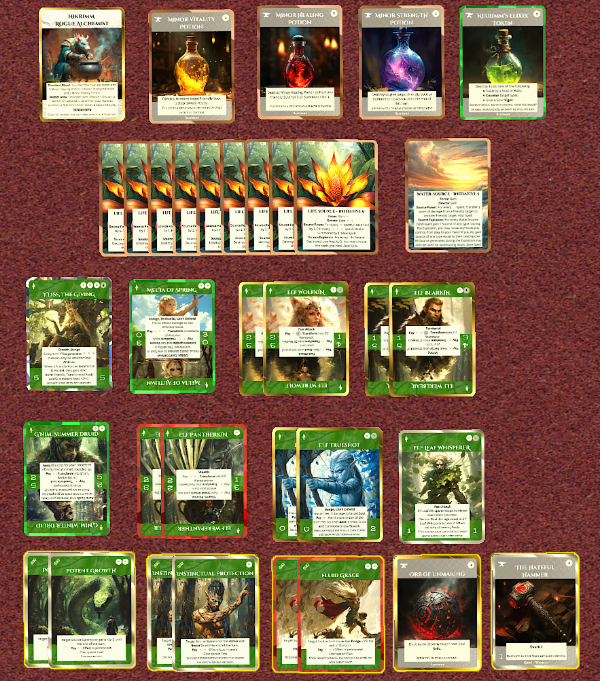
Playstyle Snapshot: A midrange deck that relies on soul abilities and spells to optimise its tempo and outfox its opponent. To win you’ll need to exploit Transform to its full extent, get value out of both your soul’s forms and look for synergies between your spells and your soul’s innate abilities. Build a board presence fast, and don’t let up the pressure until the end of the match.
Difficulty: Hard
| Summoner | Source | |
| Nikrimm | 9x Life, 1x Water | |
| Souls | Spells | Relics |
| 1x Y’liss | 2x Fluid Grace | 1x Hateful Hammer |
| 1x G’nim | 2x Potent Growth | 1x Orb of Unmaking |
| 1x Mel’ia | 2x Instinctual Protection | |
| 2x Elf Pantherkin | ||
| 2x Elf Bearkin | ||
| 2x Elf Wolfkin | ||
| 2x Elf Trueshot | ||
| 1x Elf Leaf Whisperer |
Win Condition
A life midrange deck is all about its tempo. You want to get soul advantage on the board as early as your first turn, and keep up the pressure. At any given point in the game you should have one or two souls on the board that your opponent cannot deal with in a cost effective manner, and ideally a spell in hand in case they do draw a counter.
Don’t try to rush a win, but you should aim to build a solid board advantage in your first couple of turns that can keep your opponent on the backfoot for the remainder of the match.
Card Info
Summoner
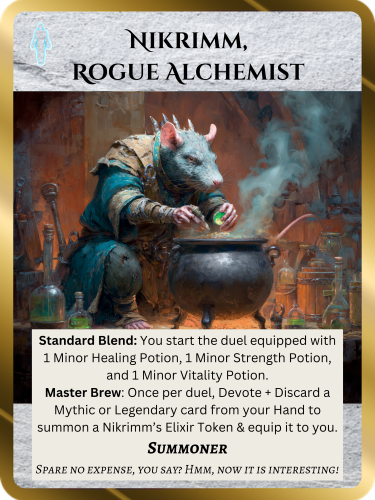
Nikrimm’s Standard Blend is invaluable to helping you establish early board presence. All his positions synergise with the abilities on at least one of your souls and once a Life deck gets a board advantage it can be quite hard to dislodge them. Once you secure the board Master Brew is the perfect counter to the cards that can dislodge you. Especially since Life’s source power and explosion means that if the match goes on long enough (or you carefully manage the damage you take) you can see whatever you discarded return to your hand.
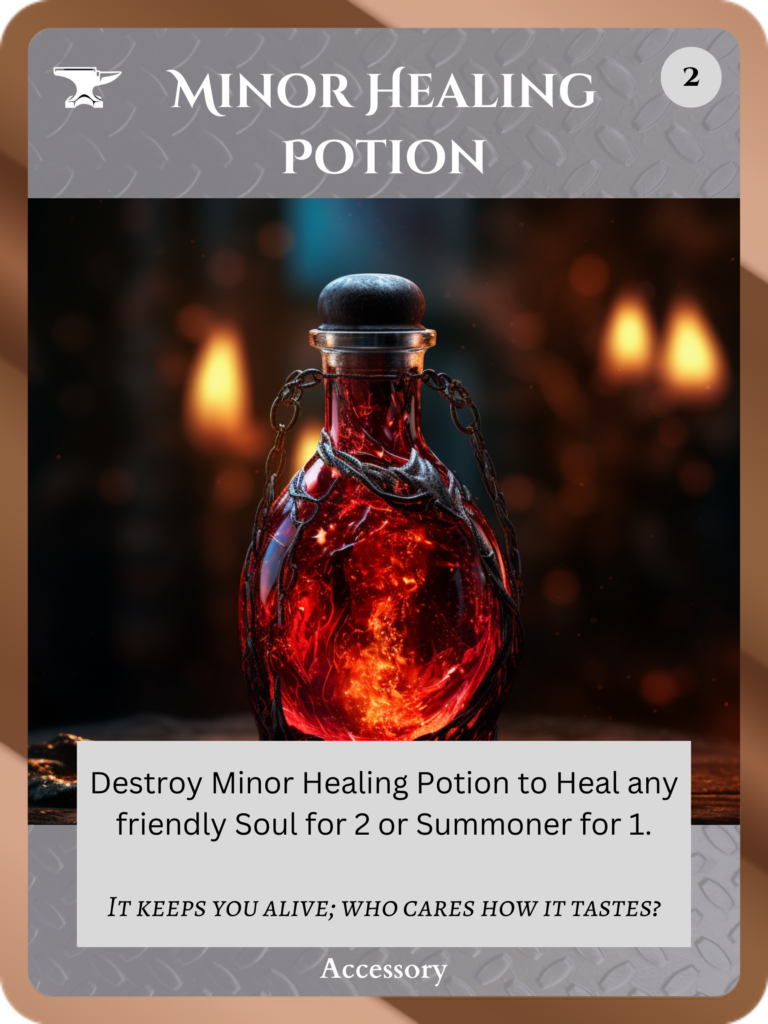
Minor Healing Potions are a counter to Rush or soul removal. If your opponent attacks with a Bog Imp or Kobold Fighter on turn one, and you respond with a Bearkin, your Minor Healing Potion will patch it up and keep it ready to deal with whatever your opponent plays on the next turn.
Remember that you can use this as a reaction, consider leaving your Bearkin on one health and hope they waste their second turn trying to finish it off with Fire source power.
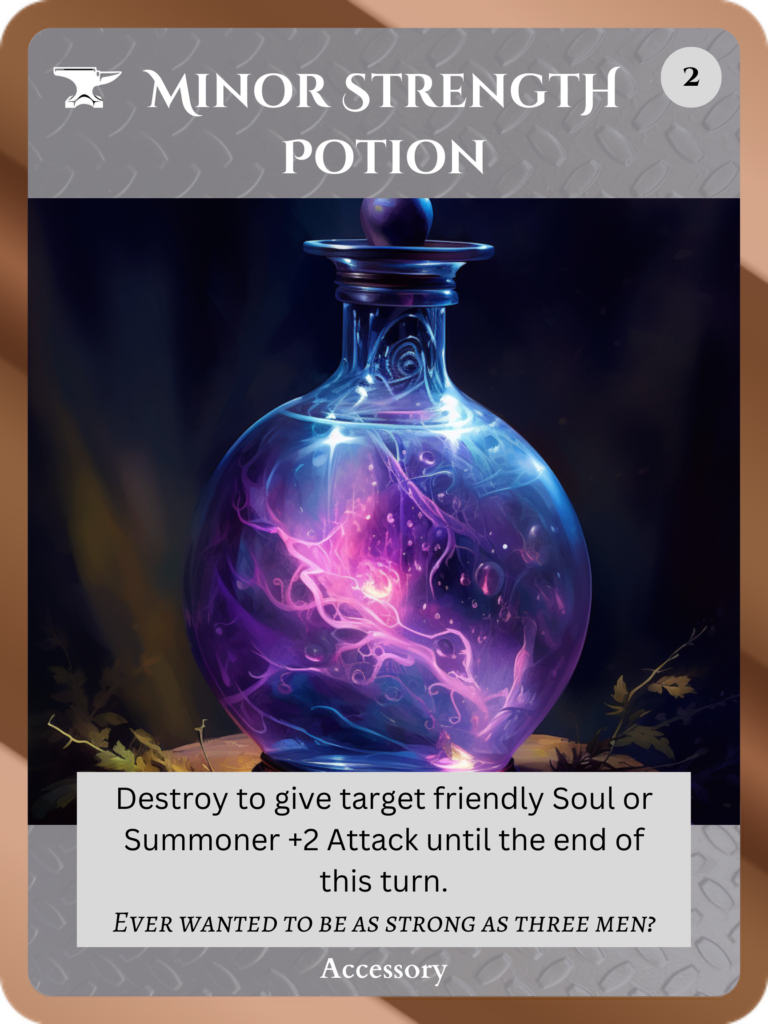
Your Minor Strength Potion can be used in a variety of ways. With your Wolfkin/Werewolf, it can make the difference between losing a fight or winning the fight without taking any damage. With a werebear or werepanther it’s extra summoner damage. You can even use it on Nikkrim to kill a soul attacking him as a last resort. Ideally you’ll use this early to establish a board advantage and try to snowball it for the rest of the match.
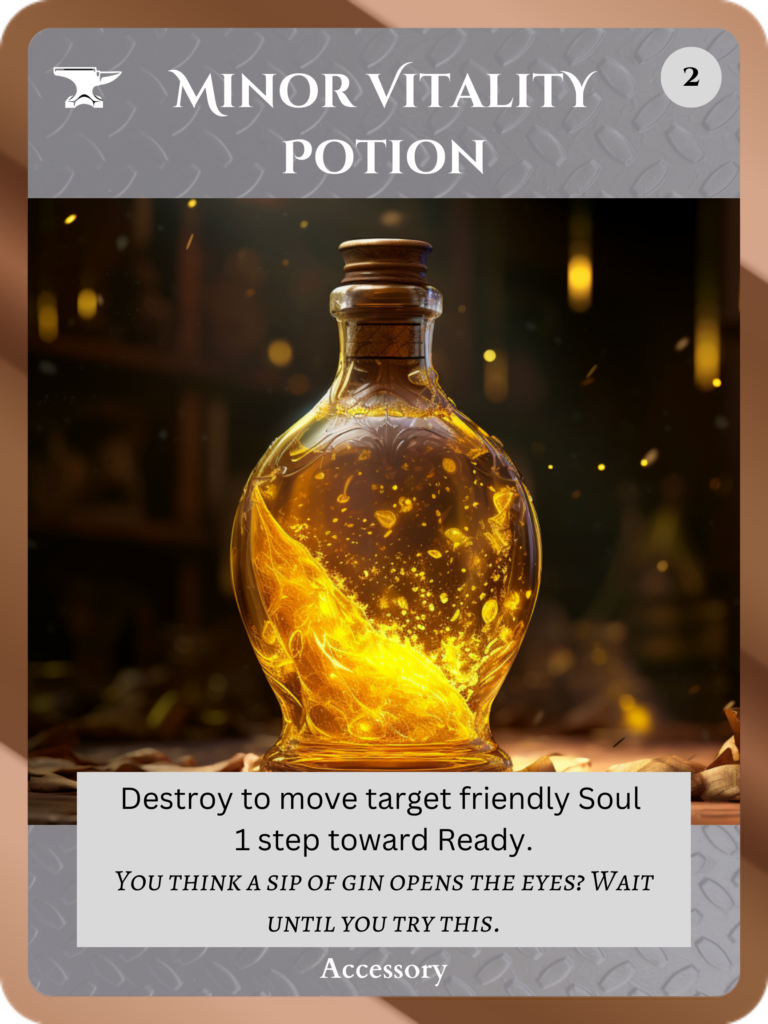
Your most common use for the minor vitality potion is to get one free hit in the early game. If you played a wolfkin or bearkin on turn 1, it can attack on turn 2 and still be ready for defence. With a minor strength potion in hand, there’s not much that will want to block it. Remember that you can use the potion after your opponent has declared his attackers and be ready in time to block. Don’t use the potion when the threat of doing so is just as effective. The secondary uses for Minor Vitality Potion are to let an archer fire twice in a turn or have your werepanther ambush without becoming vulnerable.
Warning: Once your opponent has declared an ability or spell, it’s too late to ready an archer in order to dodge (except for Hunt).
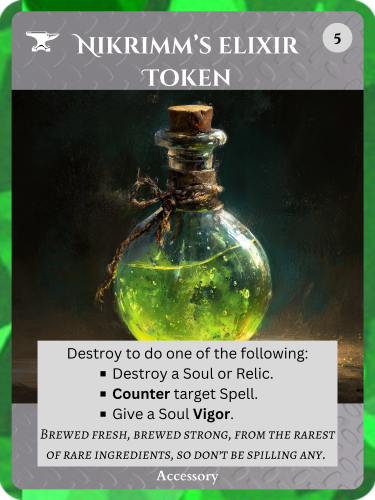
Giving a soul Vigor is unlikely to be of much use. While having a werewolf attack and defend each turn is nice, you have plenty of souls. Countering a spell like Fate’s Judgement or destroying one of the few souls that counter Life souls (like Murblap) is far more valuable. Those are your biggest threats, and so long as you draw one of the three Mythic or Legendary cards you can be prepared for them.
Sources
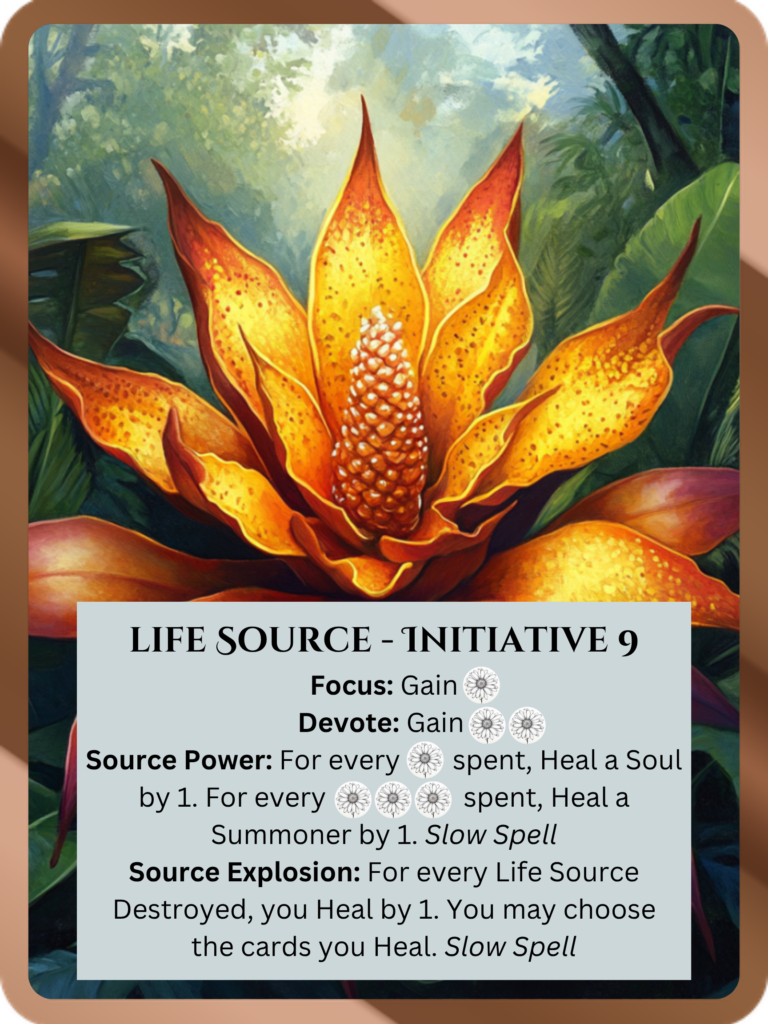
Life is of course your primary source. Don’t expect to have too much life source around for healing souls, but it can be invaluable if you have it or if Y’liss is on the field. Life source power and explosion are excellent if a match drags on, particularly the explosion which can let you recover exactly the cards you need. Including both your Elixir and the card you discarded to pay for it. As a rule, if the match is a stalemate, Life wins.
Exploding four cards is safe, this deck can do most of what it wants with six sources on the field. Five is pushing it but can be considered.
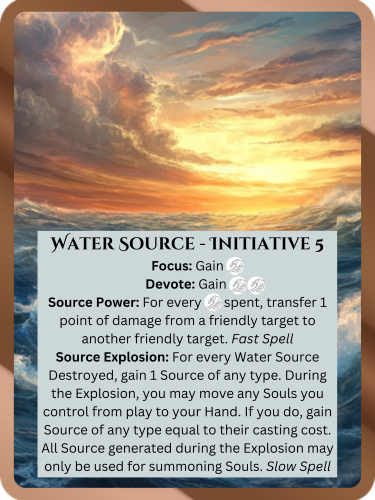
Adding a single water source to the deck for its source power is a great way to keep a soul alive. You should have somewhere safe to stash damage, if nothing else losing one card from deck is a great trade for a soul on the field. Having only one guarantees you won’t see two of these at the top of the deck and brick yourself, though if you have a good opening hand it may be worth drawing two sources on your first turn just to be absolutely sure, you can draw two summons on your subsequent turn.
Souls
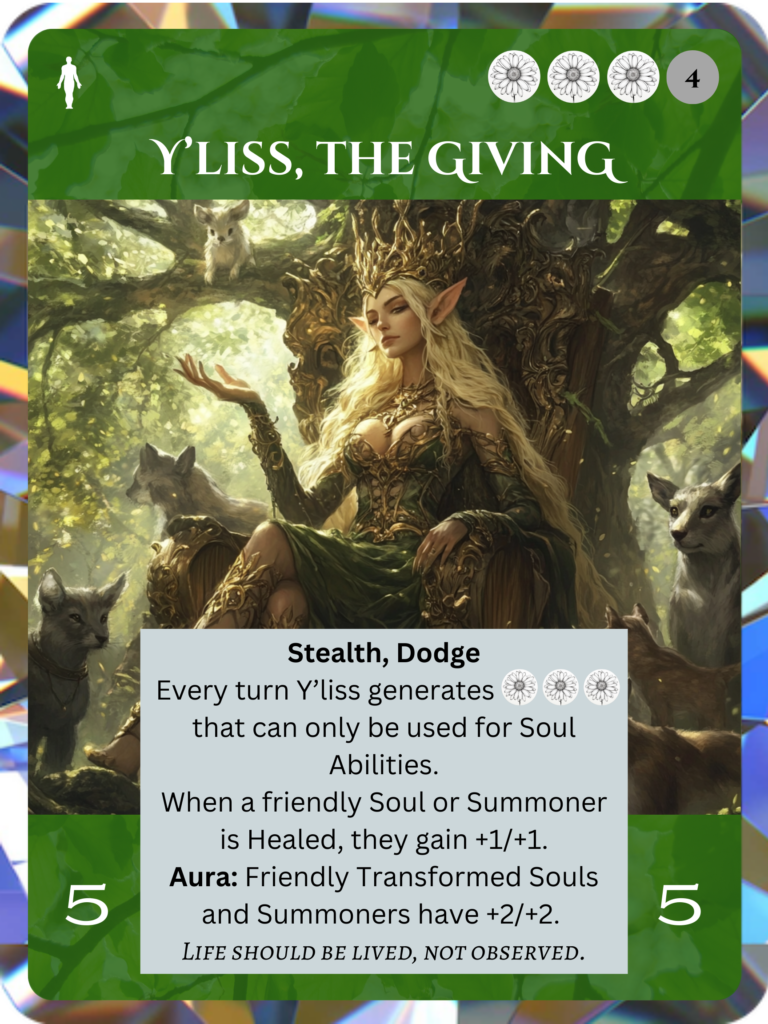
Y’liss is the keystone to your deck. Early on your souls should have an easy time dominating the board, but once your opponent starts playing 4 or 5 cost souls (and your potions are spent) Life souls fall behind the curve. Y’liss fixes that, with her on the board your souls remain competitive even into the very late game. While with both stealth and dodge she’s also one of the best blockers in the game.
If you draw Y’liss early, think very hard about trading her for Nikrimm’s elixir, she won’t give you any value for several turns and the Elixir just might. The correct choice is matchup dependent and can make or break the whole match. You could wait of course, but the longer you wait the more risky a devoted summoner is.

G’nim’s most striking feature is his Aura. However his primary use in this deck is that he’s a cheap 2/5 you can heal to full health at any time for one source. With Y’liss on the field his Winter form grows to 4/7, a ridiculous bargain for 3 source. Do not fall into the trap of making a suboptimal play now in order to squeeze extra value out of his aura later. Life midrange is a very source efficient deck in general. Use him as a brawler and treat any source gains from his aura as a bonus.
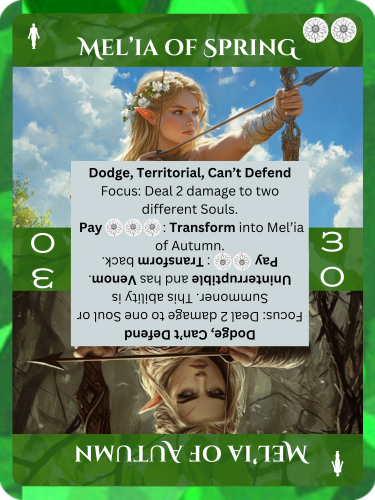
In matchups that rely on cheap one or two health souls Mel’ia of Spring is practically a win condition all by herself. And even if her spring form isn’t useful, Mel’ia of Autumn is good against most decks that use souls. While she has the (rather significant) weakness of being blocked by damage mitigation there are few matchups where she doesn’t produce value.
As Mel’ia can’t shoot and dodge in the same turn, if your opponent runs a lot of removal it may be worth holding her until the opportune moment, but dropping her spring form onto the field and forcing your opponent to hold cards in reserve is a powerful utility. Take the time to memorise the rules for how multiple damage dealing abilities in a single chain interact with damage negation. The short version is that if you have Mel’ia of Autumn and a Trueshot, passive defences like armour need to block all five to prevent Venom taking effect, but active defences like Earth Source only need to block two.

The ideal use of the Pantherkin is to play her in the late game with Y’liss on the field and finish your opponent off with 5 sneak attack damage. However she has a second use in this deck, if you are unluckily enough to play against a slower source and go first, dropping a pantherkin for one source as a blocker is a good move. With a Potion of Strength in hand you may be able to trade
her for a three or four cost soul like a Paladin or Boulderfoot Dwarf. Or get a sneaky two damage when your opponent lets her pass, you also have a Potion of Vitality.
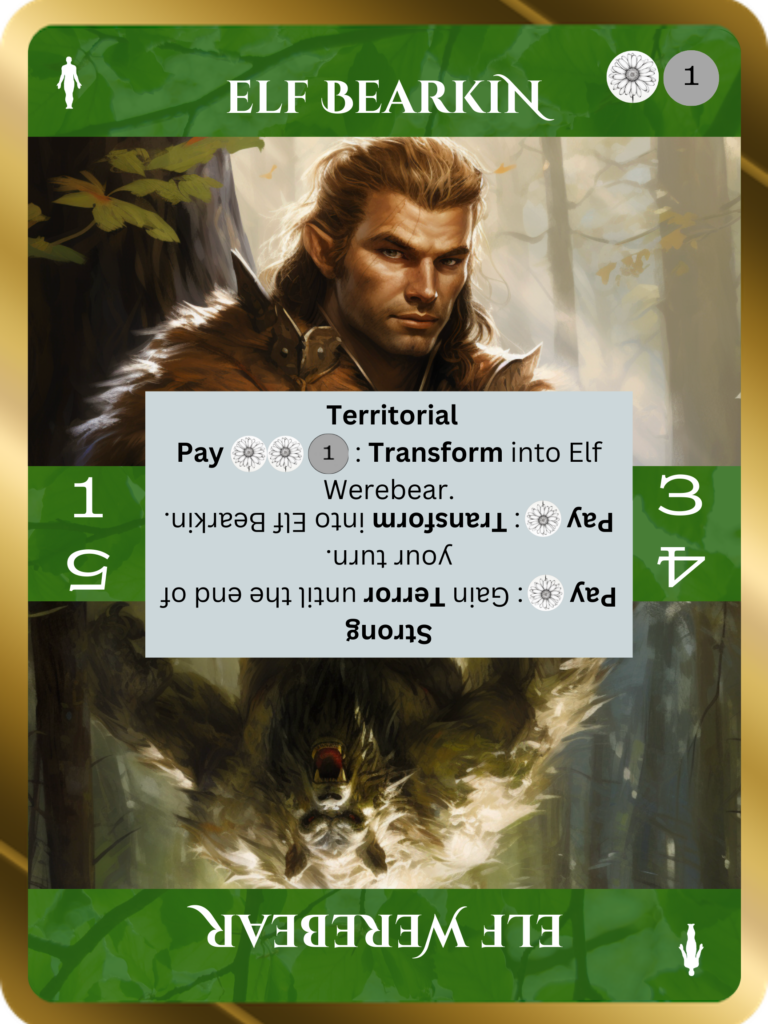
Bearkins serve two roles, against rush decks (or board wipe combos) they are a Territorial blocker. And they are your main damage dealer. Paying two source for a Bearkin on turn 1 then attacking with it on turn 2 is an excellent way to start snowballing against a slow deck. Along with the Wolfkin, he is one of your most standard openings.
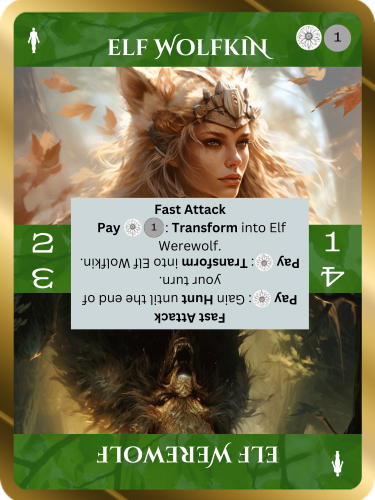
The wolfkin is an incredibly flexible soul that has multiple roles. Fast Attack makes her an excellent defender, but many times your opponent would rather let her hit the summoner than sacrifice a soul making her good at summoner damage too. And if you wish they wouldn’t, she can Hunt. If you haven’t played a territorial soul the wolfkin is often your best opening.
If you have the right opening hand, consider summoning her by Devoting one source and leaving the second source open, especially against rush decks. If your opponent plays a removal spell you can transform in response, three health is just enough to survive a Fireball or Shared Punishment. And if they don’t, play a territorial soul or transform her anyway. Be warned that a smart opponent may pretend to brick, tempting you to transform her or waste your source then reacting.
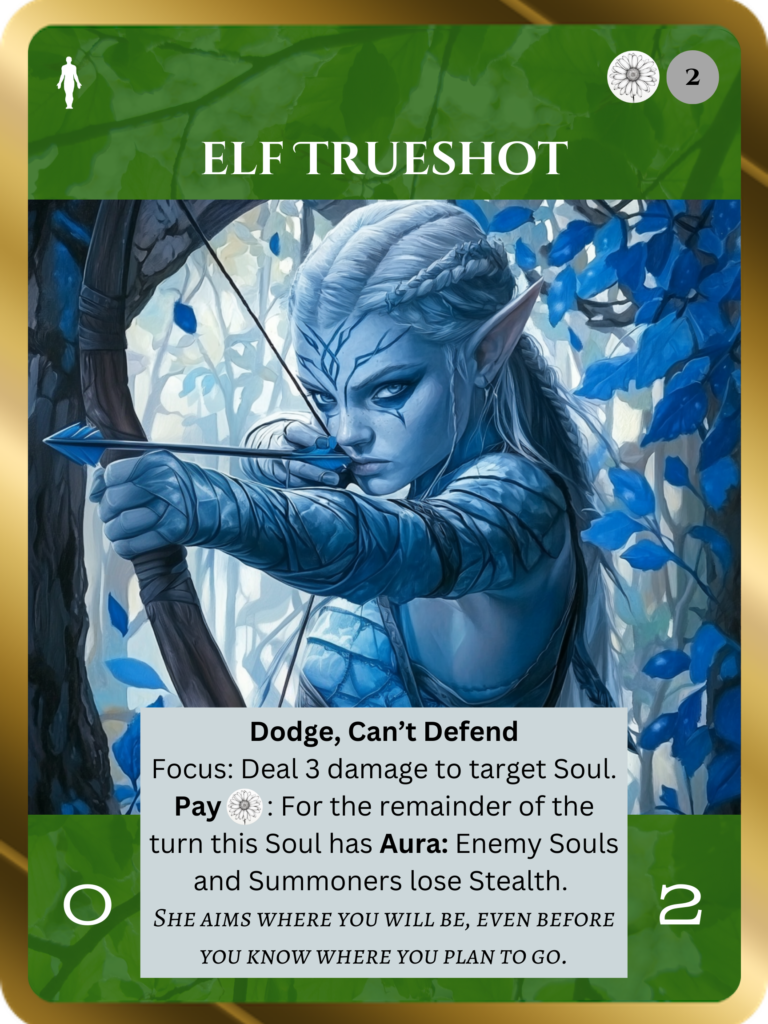
Trueshots are your deck’s primary source of removal. While they’re incapable of summoner damage their board presence is exceptional. Usually you’d want to play one after you have a werebeast on the board but this is matchup dependent. Rush decks with cheap removal are the worst time to open with an archer. They are also one of the game’s only counter’s to Stealth.
One of the most important skills to master with archers’ focus abilities is knowing when to shoot. Waiting to shoot on your opponent’s turn gives you more knowledge of their moves and potentially a better target, sometimes it’s best to wait until they declare the end of turn and react to that. But waiting means your opponent may have more chances to counter her, or at least force a dodge. Study the potential counters and the subtle interactions (e.g. If an archer reacts to an archer, their shots are simultaneous. But if a soul reacts with a Destroy effect instead, they are sequential)
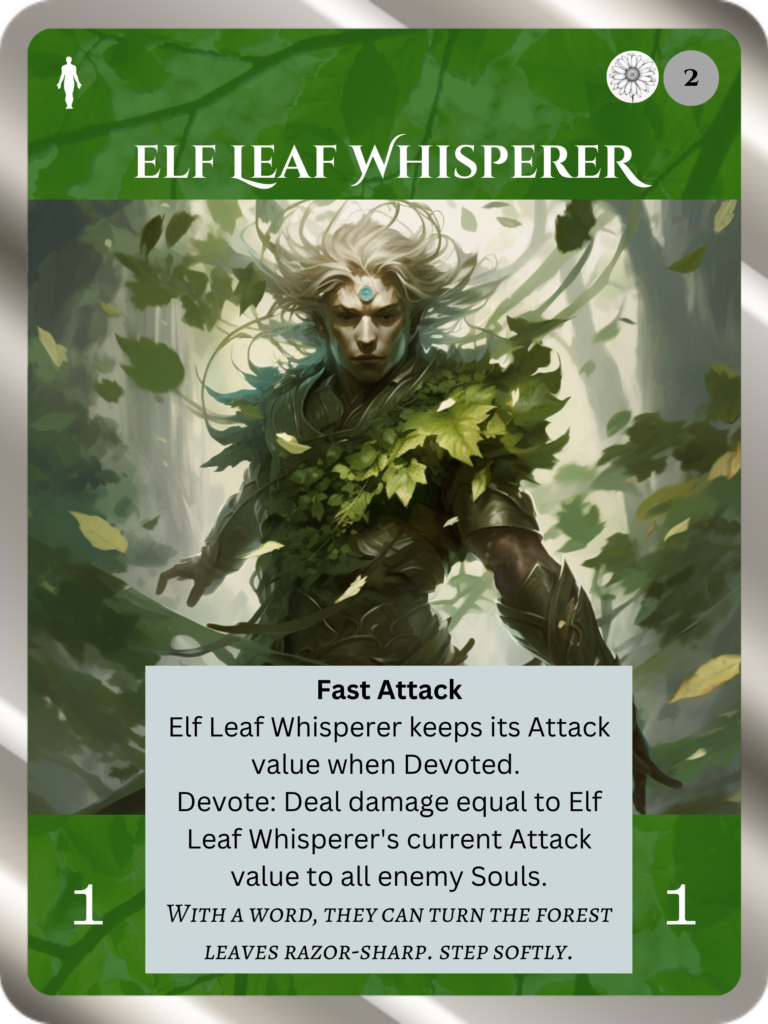
The Elf Leaf Whisperer is in here as a board clear against swarm decks, outside of that he won’t get much use, anything he can do a Werewolf or a Trueshot would do better. Even against Swarm decks, he may need a Potent Growth in order to function.
Spells
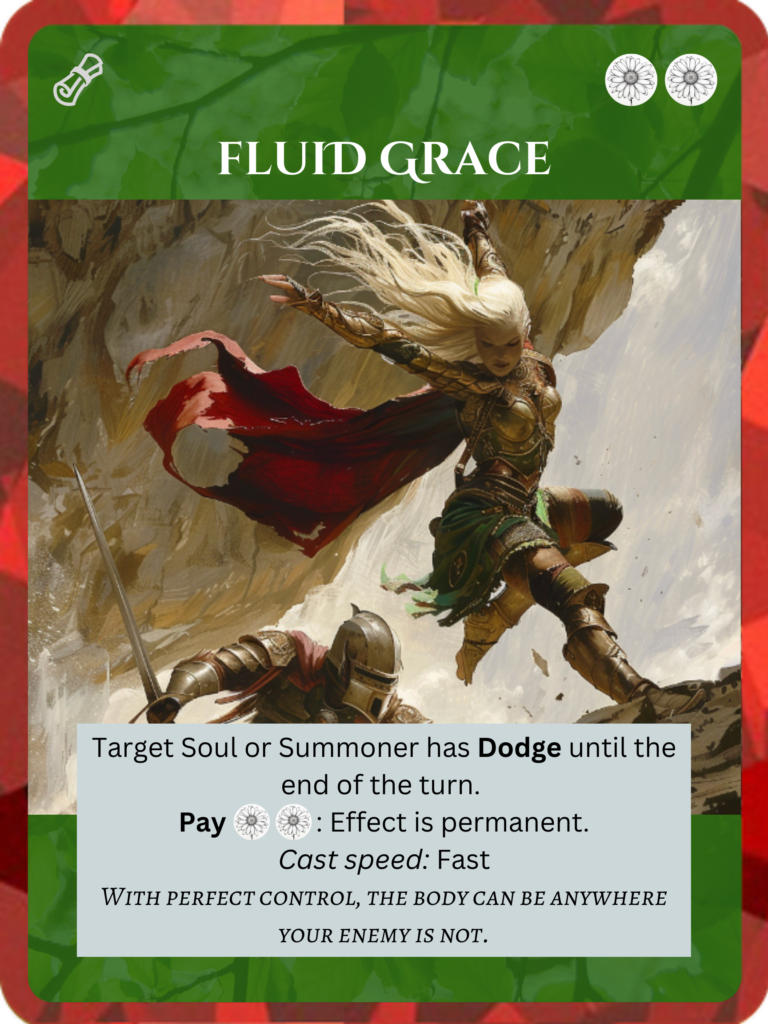
Fluid Grace is one of the strongest defensive cards in the game, something life needs to compensate for its awful handblocking. Against Burn Decks you want it out as soon as possible. But against other decks you can usually wait until you establish board control. A wolf killing a soul with a fast attack is far more valuable than dodging that soul.
Be warned: Once your opponent has declared a damage dealing effect, it is too late to cast Fluid Grace in response.
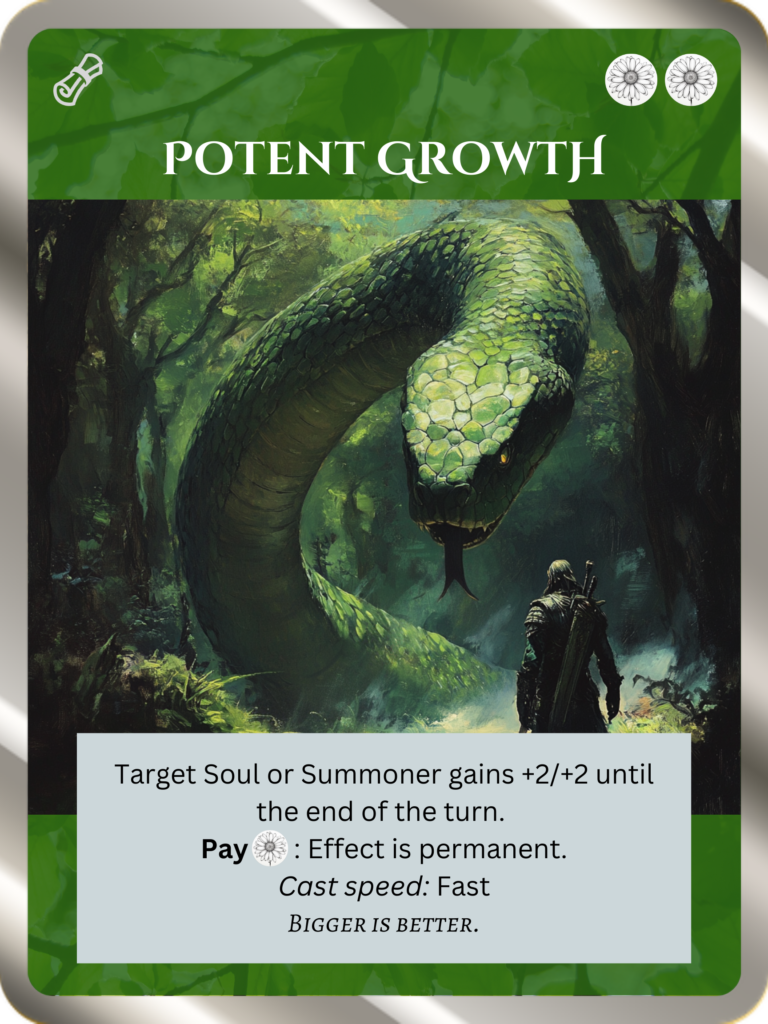
Even a single potent growth on a Werewolf or Werebear makes the difference between them winning or losing a fight against a soul of their cost like a half giant. And outside of hard removal like Venom there’s not much that can kill a 6/7 werebear in a remotely efficient manner. Against many decks opening with a bearkin (or to a lesser extent a wolfkin) then on
your next turn transforming it and adding a Potent Growth is enough to create an unrecoverable advantage. But if they can efficiently remove it, that would be the definition of overextending. Be warned that a soul can die when the buff wears off if they have enough damage.
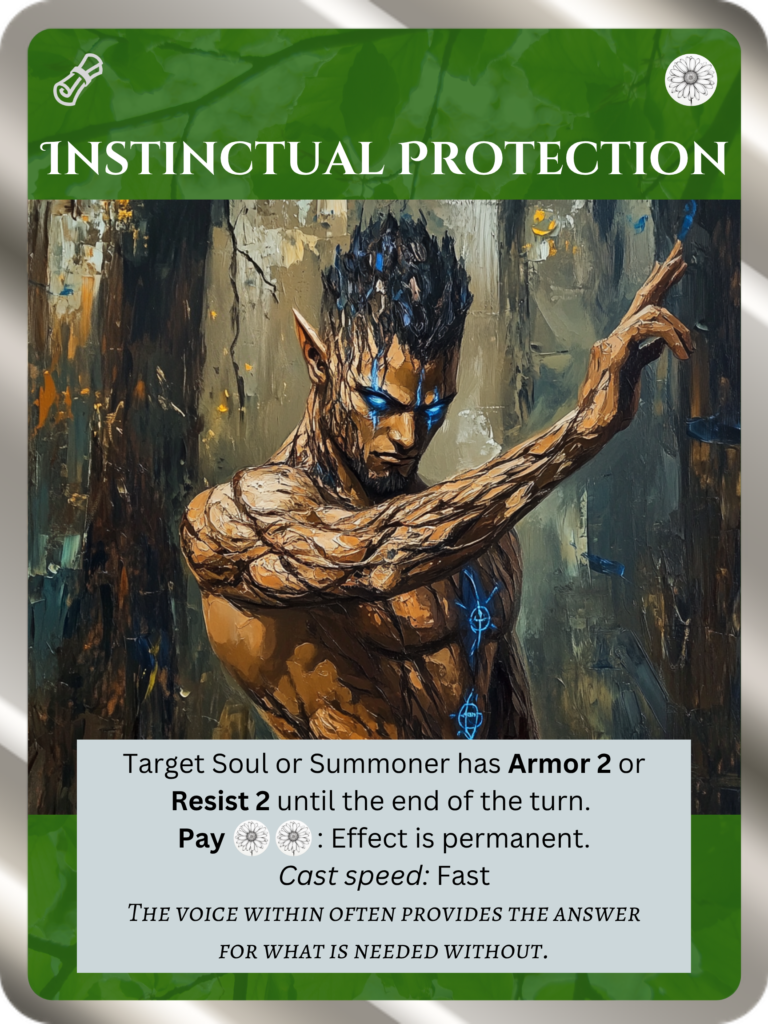
Paying one source to negate two damage and save a soul is incredible value. Never ever let a soul die because you’ll “waste” instinctual protection if you can’t make it permanent. Besides, if you block two out of five damage coming towards a werebear, chances are your opponent can do that again. Blocking four out of ten is still a dead werebear.
Keep this card in your hand, and play it to save a soul. Only worry about permanent buffs if you know your opponent’s deck or if playing it in advance is more source efficient than waiting.
Relics
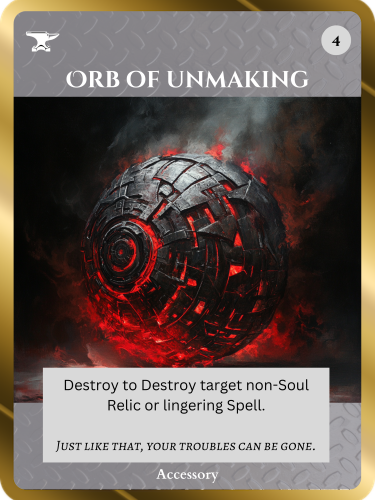
Every deck should have at least some relic removal. Having an answer to a match defining relic like Armour of Suffering, Pyrebloom, or the Korikana Set is the difference between victory or defeat. Most of the time you can let this rest in your hand and play it as a four cost relic removal, but when you need fast speed relic removal, you need fast speed relic removal and this can provide.
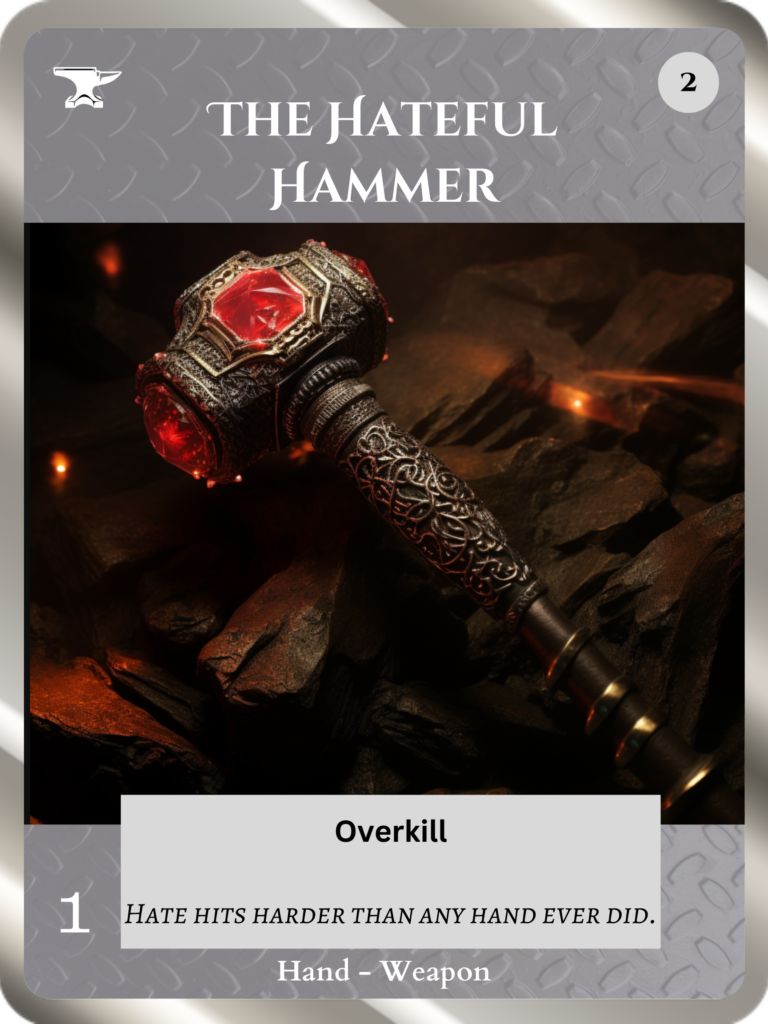
This is an opportunity play for one of your wolfkin. Hunting souls with Fast Attack, Hunt, and Overkill is a very potent combo.
Mulliganing
Ideally you’d want to have at least one Bearkin, Wolfkin, Me’lia, or G’nim in your opening hand for your turn one play. Excluding mythics, the ideal opening hand would be a Wolfkin, a Bearkin, and Instinctual Protection. With those three cards played smartly, you have an option for just about anything your opponent might do in the first two turns except some specific mythics.
Sideboarding
When playing 2 out of 3, you can switch cards between matches. 7 cards can be in your Sideboard: 1 Summoner and 6 Summon cards.
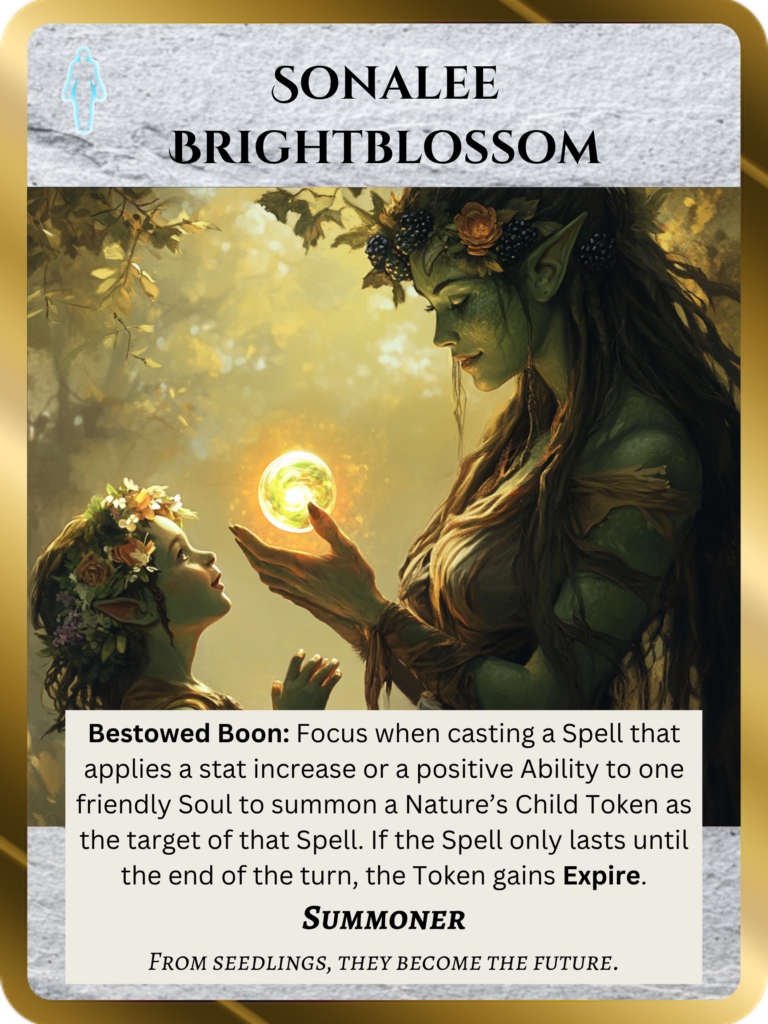
Sonalee is one of the obvious picks for a Life Midrange deck. The key to understanding Sonalee is that turning a buff spell into a Nature’s Child is nearly always worse than playing that same spell onto a soul. However Sonalee can summon Nature’s Children on your opponents turn, this gives her some of the best blocking in the game, so consider putting her in your
sideboard if you expect to see rush decks or combo decks that sweep aside defences and attack in one turn. If you plan to do so, include Welcome Adaptation and Feral Strength in your deck. Sending a Nature’s Child with Wide to block a Bog Imp and gremlin for one source is much better option than sending a Bearkin to block only one of them for two source (especially as they will likely have enough damage to kill the bearkin thanks to Meglar the Low).
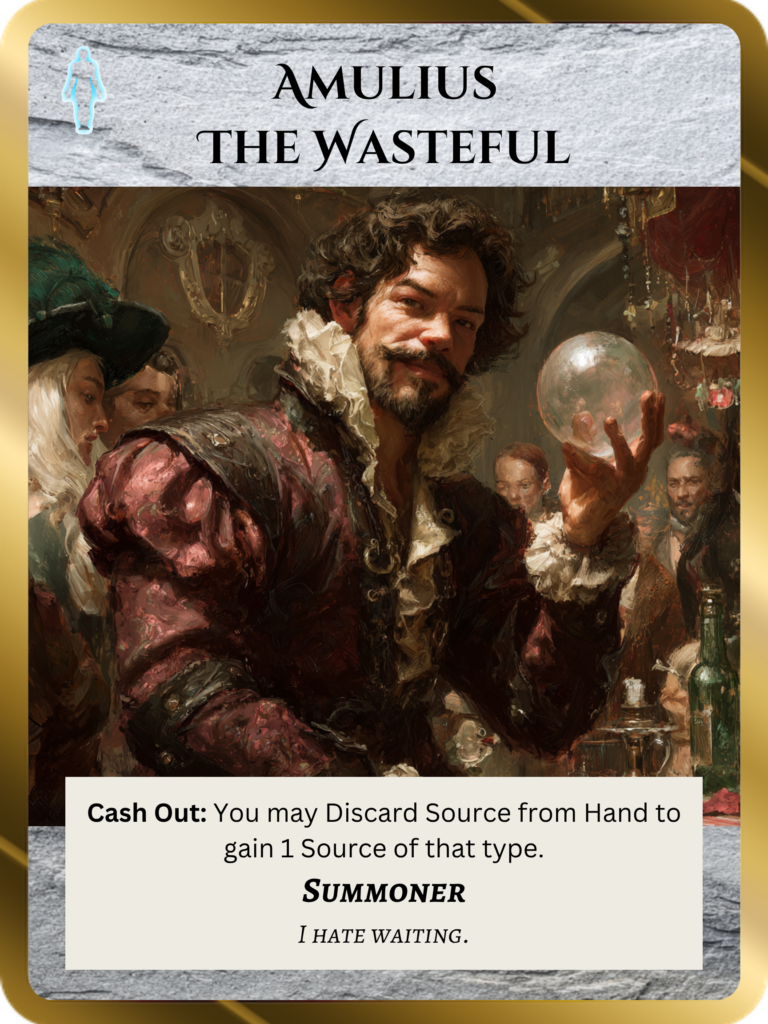
With Amulius you don’t need to keep a source open in order to use temporary Instinctual Protection, or if you bring out a Bearkin on your opponent’s first turn, he will let you transform it and counter attack on your first turn. However he’s a summoner that is extremely hungry for card draws meaning that while you’ll have more source, you might not have anything
to use it for. Using Amulius increases the skill requirements of this deck significantly. If you do use him, sideboard in an extra bearkin and try to dig hard for one. If you aren’t attacking with a werebear on your first turn, it’s unlikely you’ll get more out of him than Nikrimm.
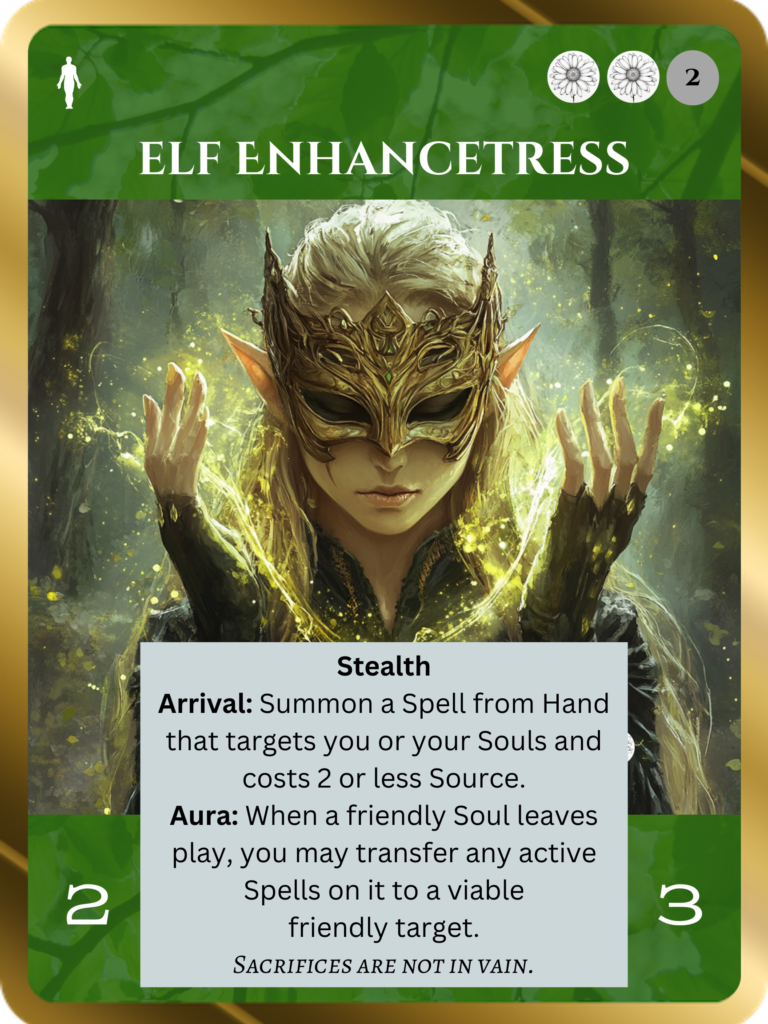
This deck has only two spell cards the Enhantress is likely to protect. She is unlikely to perform in this deck.
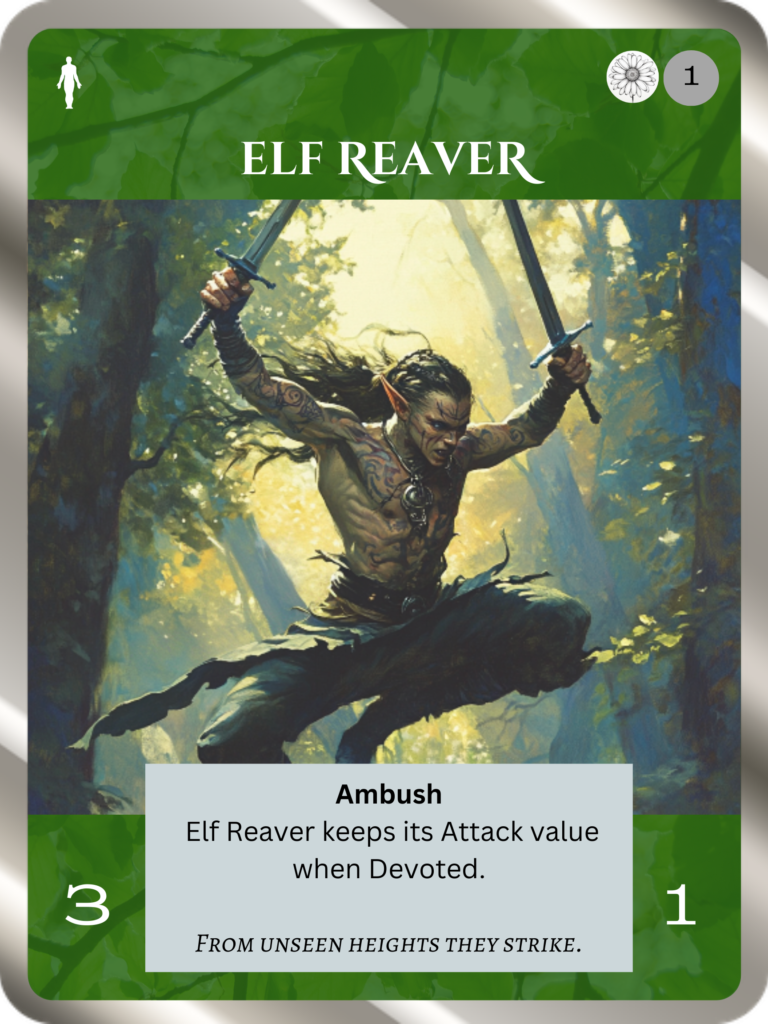
Swapping your Trueshots for Reavers will drastically decrease your removal capability, and make it impossible to remove souls on your opponent’s turn. In exchange you get some of the most cost efficient summoner damage in the game. If you need to defeat your opponent early, or have a reduced need for soul removal, Reavers are an excellent choice.
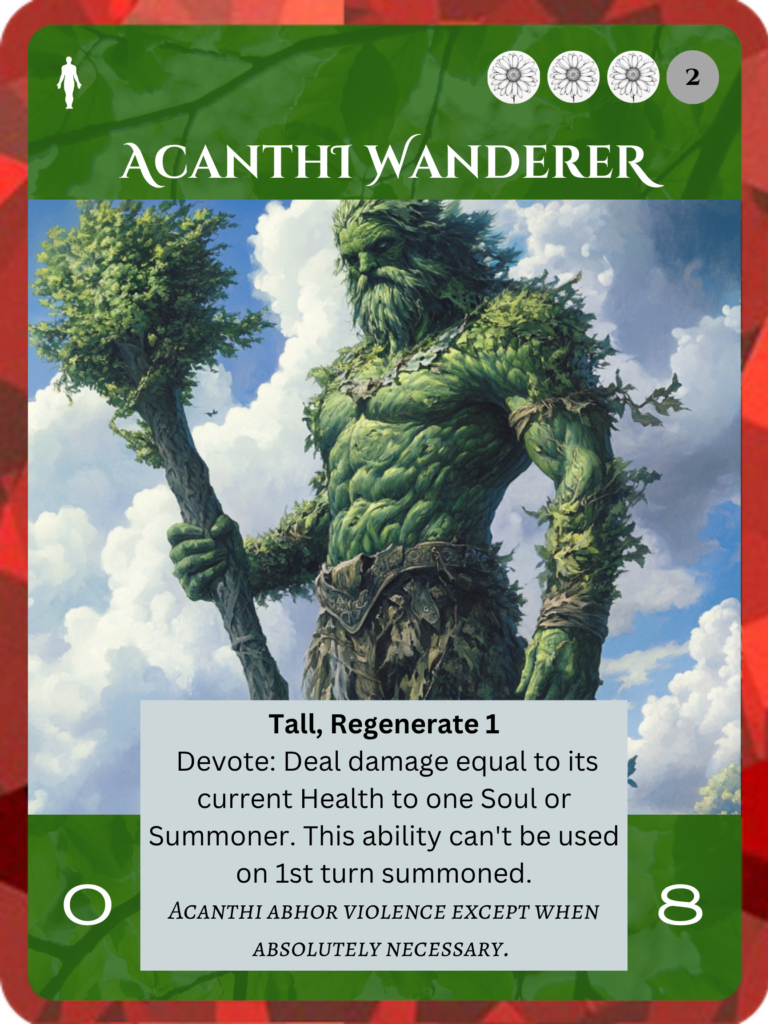
The Acanthi Wanderer is an alternative to the werepanther. If you’re expecting to face big souls you can’t deal with easily or an opponent with modest handblocking, throwing him onto the field early is an effective strategy. Unless you have Y’liss on the board, the choice between him and Werepanthers is mostly matchup dependent. But with Y’liss the Werepanther becomes the standout choice.
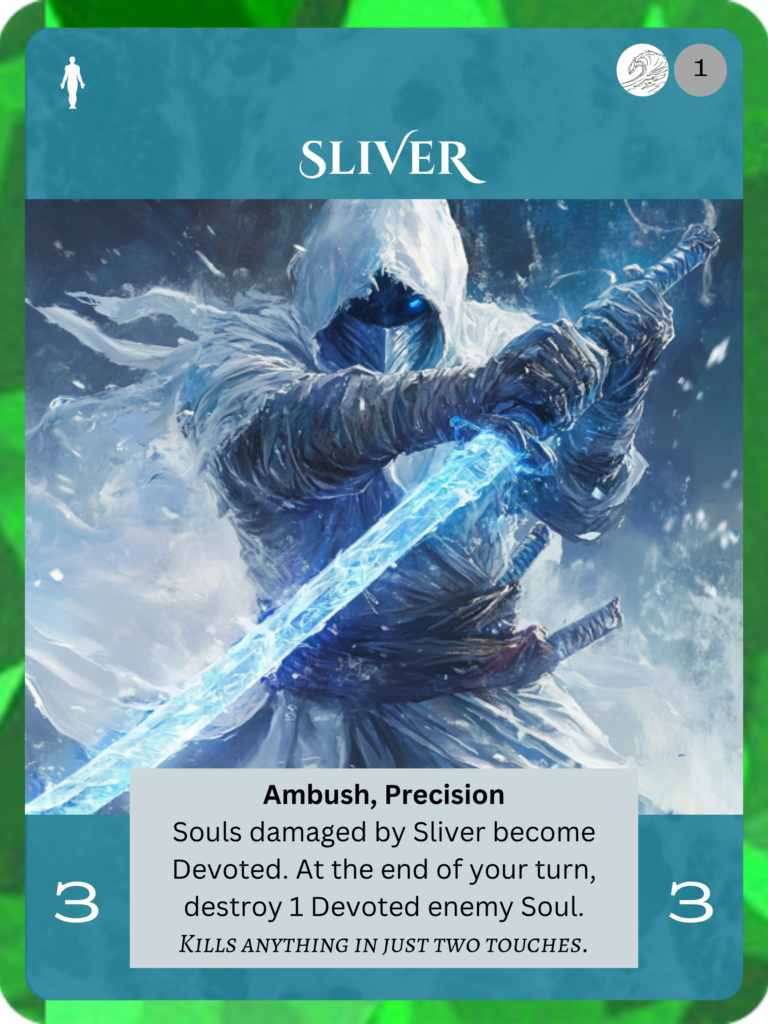
With one water source in your deck you’ll only play Sliver once in a blue moon. However that is one blue moon more often than you’ll play Si’tun’s Wild Ascension making him your best choice if you want more mythics to pay for Nikrimm’s Elixir. If you want to maximise your chances with the maximum of four mythics you’ll need him and Si’tun of course.
Or you could replace your one water source for an Earth and use the Stonespeaker Staff and Baldaga as they have better hand Blocking and you may summon Baldaga From the Grave. However some players consider running one source to cheese out mythics unsporting. Sliver would be a sportsman’s choice as you might draw your one water and play him fairly. If you manage to get him onto the board he does fit this deck’s strategy well.
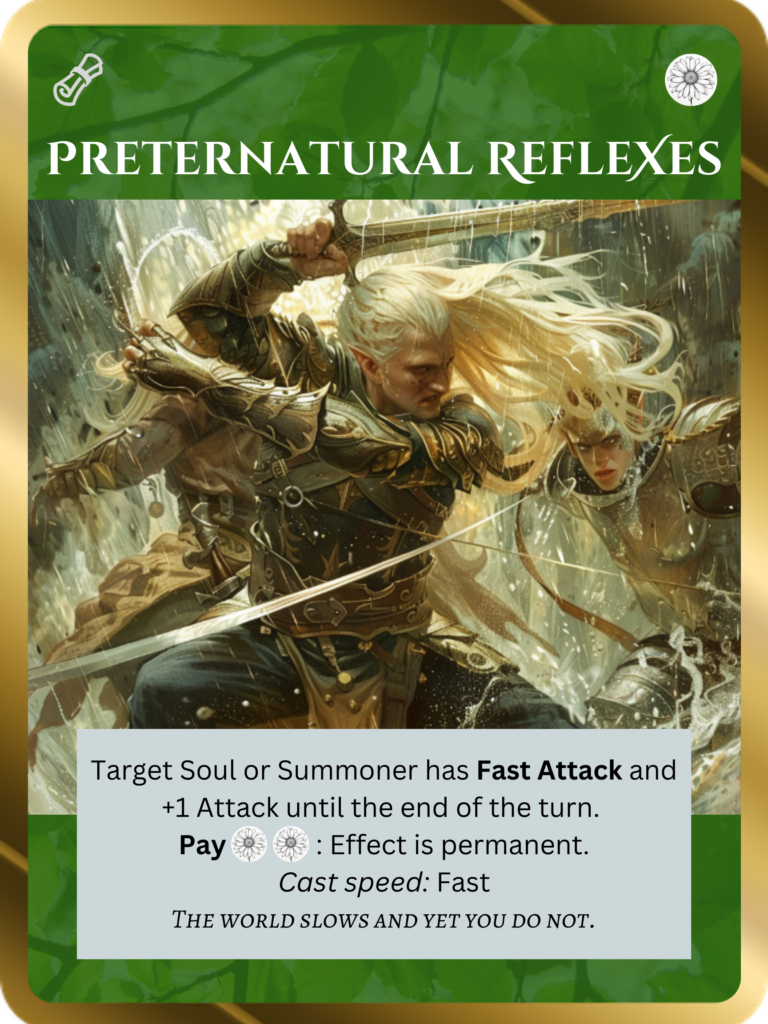
Fast Attack is an exceptional ability, but of your high damage souls, half of them already have it and the other half are (hopefully) too busy hitting the summoner to need it. But consider putting this into your deck if your opponent runs lots of small souls, a Panther Kin’s Stealth combines very well with Fast Attack. If you’re running Elf Reavers you should definitely use this card.

Feral Strength is a surprisingly equal replacement for Potent Growth. The reduced source cost means you only need to keep one source ready for a permanent effect, and +1/+1 is all you need to swing a fight up between a werebear and something like a half giant. The reason Potent Growth is recommended is that there are matchups when six damage kills
a soul and five does not, (and +2 damage lets a Leaf Whisperer clear a swarm of Human Knights), but this is matchup dependent. If you are playing with Sonalee, definitely take Feral Strength.
Having a second (or even a third) Orb of Unmaking in your sideboard can help shore up your deck against some of its most potent counters. However, one should be enough for your mainboard.
Bad Matchups
Your worst matchup by far is Summoner Enhance. This deck excels at keeping value on the field while trimming your opponent’s field, until the advantage becomes overwhelming. Against Summoner Enhance you have few ways to remove their tools while they’ll be destroying your souls. Expect to dominate the early game, only to see a turnaround when they complete their build and can start destroying your souls with Fast Attack or ending a fight stronger than they started with Lifesap. Against Enhance your best attempt is to try and win before they’re ready, sideboard in more damage, and more Orbs of Unmaking if they use relics. And don’t rely on Fluid Grace. Any decent summoner Enhance deck will be packing a counter to it, probably three Hateful Hammers.
Destroy effects like Murblap or Orc Vampire are especially troubling as not only do they bypass your soul’s innate defences, they also bypass all the spells you have to surprise your opponent. Fate’s Judgement is especially dangerous to your deck as it can completely reset the board, even bypassing Stealth. This is why Nikrimm’s elixir is absolutely invaluable to the deck. Remember that you can use the Orb of Unmaking to counter their own Orb and protect the Elixir.

Soul for Soul other Midrange decks have an advantage against Life: a Half Giant or Crystal Golem will kill a Werewolf or Werebear and live to tell of it. You will likely have an advantage in the earliest turns until you’ve used your potions, at which point things can turn against you fast. At the other end, killing a soul like a Spine Cruncher or Mammoth Tunnel Worm requires two buffs on your souls (or two souls teaming up).
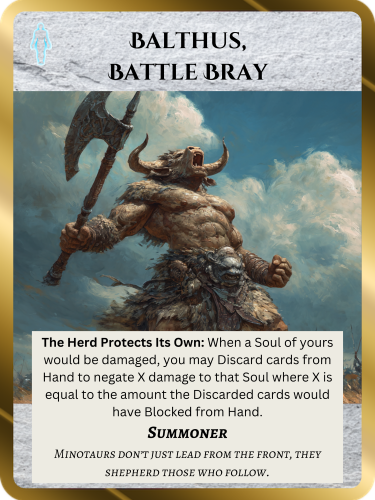
For summoners Balthus is a terrible matchup. Your wolves are especially vulnerable, since if his ability protects a soul it will likely kill the wolf in retaliation, but even your bears are countered by his likely deck construction of strong handblockers. Balthus also tends to favour Order and Water decks which have many useful tools against Life Midrange.
Closing Thoughts
Compared to other midrange decks Life is the most tricky to play, its souls (and potions) can dominate the early game but quickly fall behind the curve unless you draw Y’liss or use your spells. The deck’s signature ability, Transform, is an advantage if you exploit it to optimise your tempo but a disadvantage otherwise.
What it offers in exchange is flexibility, no other midrange deck has Life’s wide selection of specialists or such an array of fast spells to surprise your opponent and reverse the outcome of a fight. You are playing elves in a forest, deception is as important as your souls’ lifetimes of experience.
This Deck Tech was designed and written by The Kings Raven